

Organizational change / Mar 21, 2025
Company Culture: Why It Matters and How to Change It
3 min read
Summary
Company Culture: Why It Matters and How to Change It
Company Culture: Why It Matters and How to Change It
Company culture makes or breaks a workplace. In today’s work world where talent acquisition and retention are HR’s primary focus, company culture is playing an even larger role than it ever has before. According to a Deloitte study, 95% of candidates believe culture is more important than compensation. In order to employ the best talent, culture needs to be a priority.
This is especially true for today’s younger workforce. For millennials, according to a recent article in Entrepreneur, “a career means much more than a stable place to work for 25 years; employees are looking at company values, meaning, community, and culture.” And with millennials’ imminent workforce takeover, companies need to understand what their company culture is and how to implement change.
Types of Company Culture
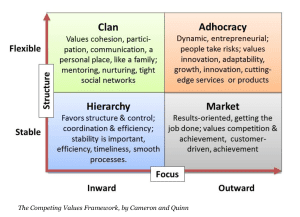
While there are many different classifications for company culture, a heavily researched and consistently implemented classification tool is Kim Cameron and Robert Quinn’s Competing Values Framework. This model breaks down company culture into four main types: Clan, Adhocracy, Market, and Hierarchy.
Image credit: Cameron and Quinn
Clan culture is family-like, with a heavy focus on mentorship and teamwork. Loyalty and tradition are what keep the company running smoothly.
Adhocracy culture is the most entrepreneurial of the culture types. Its focus is on taking risks, innovating, and doing.
Hierarchy culture is more traditional. It prides itself on its structure, control, formality, and efficiency.
Market culture is more competitive and achievement-based. It has a hard focus on accomplishing goals, maintaining reputation, and driving success.
There is no one right culture; an organization should strive for a culture that fits its own strategy and mission. Once a company is able to diagnose its culture, the next step is establishing what their ideal company culture looks like. And once that’s done, it’s time to look toward how to change.
Implementing Cultural Change
Cultural change happens most effectively by establishing emotional connections and a collaborative community goal. According to the Deloitte study, there are three main elements to making a company culture shift.
Purpose: If those working for a company are able to see and understand the bigger picture, better work will be done. By understanding what the goal for a company is, a sense of unity is established at every level of employment, creating the cohesion needed for a successful work culture.
Leadership: It’s important for leadership to be involved not just in directing the workplace but also in setting culturally positive examples. Leadership can do so by keeping open lines of communication with employees and developing relationships with them so each employee feels genuinely cared about. Providing training and development tools, as well as giving feedback, can help leadership establish a better overall culture.
Participation: “By linking the deeds of individuals at any level to larger goals, leaders can give meaning to even the most ordinary actions,” the Deloitte study says. Yes, leadership should inspire, but it is only the action and participation of the company community that has an overall effect on the company. Once a purpose-driven workplace is established by the leadership, employee participation should follow along.
What does your company’s culture look like, and what steps are you taking to change it?
More blog posts to read

Jul 4, 2026
15 Fun Team Building Exercises for Work
Looking to strengthen your teams? Explore 15 fun team building exercises for work and tips on how to lead them effectively to create a more cohesive workplace.

Jul 4, 2026
Understanding the Coaching Leadership Style: Examples and Use Cases
What is the coaching style of leadership? Learn all about the coaching leadership style, examples in the workplace, and how it can benefit your organization.