Feature: AI Skills Translator
Turn job descriptions into a skills map recruiters can use.
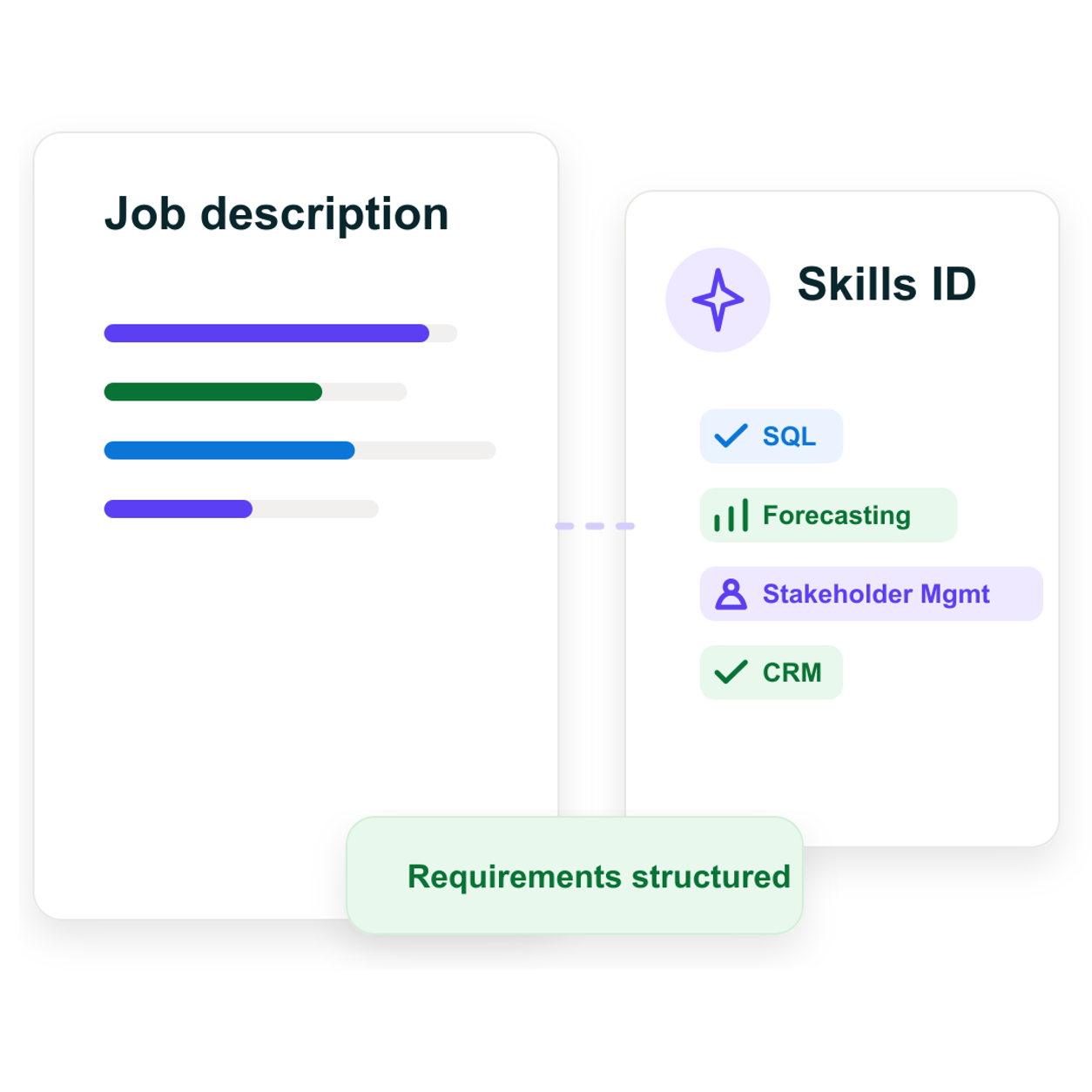
AI Skills Translator breaks vague requirements into normalized skills, capabilities, and review criteria so talent teams start from the same map before candidates enter the funnel.
How it works
From integration to outcome
Parse the Role
Extract responsibilities, required capabilities, and implied skills from the job description.
Normalize the Skills
Map requirements into a consistent skills structure that recruiters and reviewers can share.
Give Reviewers the Same Map
Reduce reviewer drift by tying screening, matching, and feedback to the same role model.
Give every reviewer the same map.
Skills-first role interpretation that improves screening consistency and hiring alignment.
The Problem
Every ambiguous requirement becomes a debate later.
Job descriptions often mix responsibilities, preferences, and inherited language into one document. Recruiters then have to screen against ambiguity while hiring managers apply different standards after candidates are already in motion.
Learn more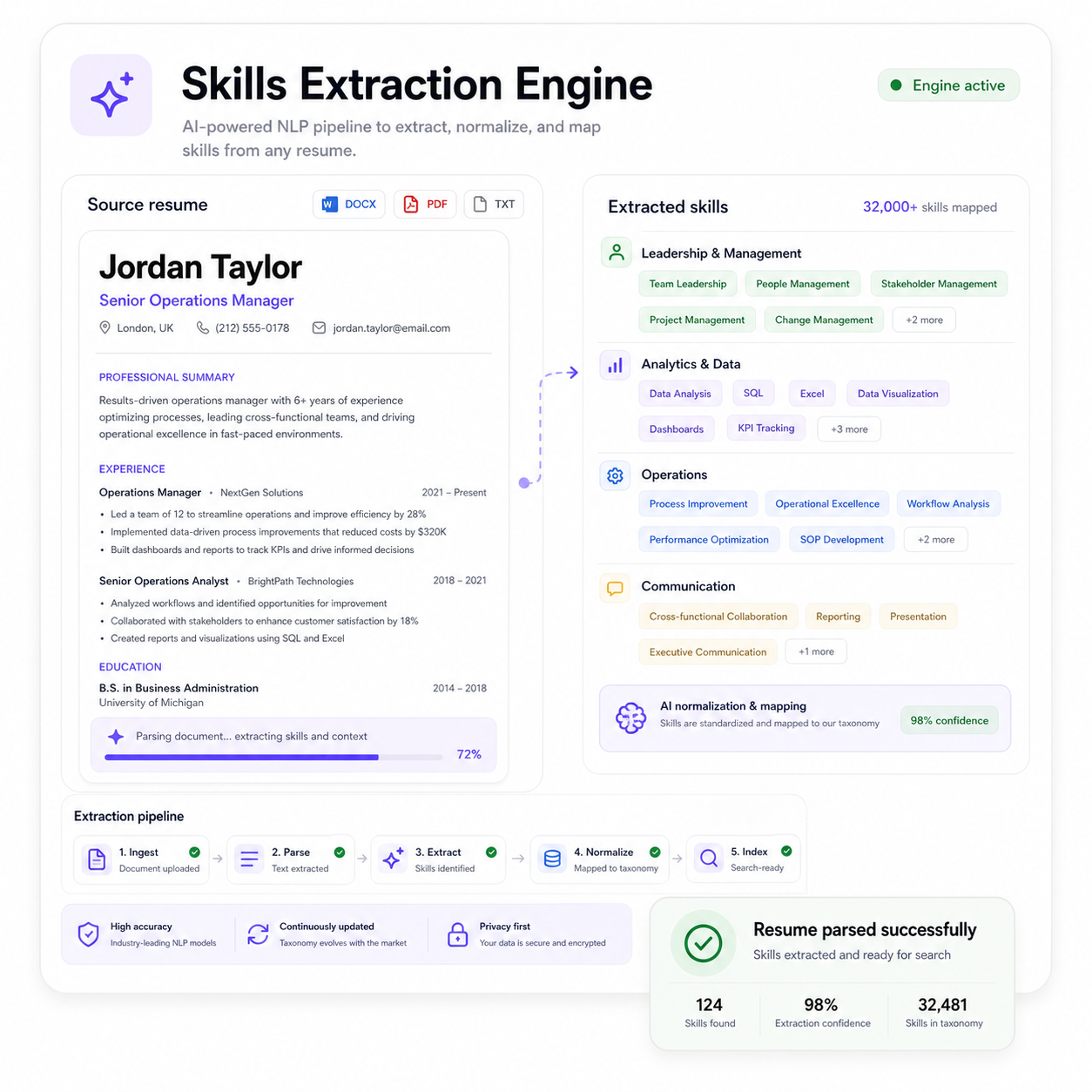
The Solution
AI Skills Translator makes the role reviewable before candidates enter the funnel.
Instead of treating a job description as a rough proxy for hiring criteria, AI Skills Translator converts the role into structured capabilities. Recruiters screen from a clearer model, reviewers use the same language, and the pipeline starts with less drift.
Talk to SalesStructured Capability Mapping
Turn inherited job language into a reviewable set of capabilities before screening starts.
More Consistent Screening
Give recruiters and hiring managers the same criteria instead of competing interpretations.
Skills-First Foundation
Move away from keyword shorthand and toward a defensible skills-first workflow.
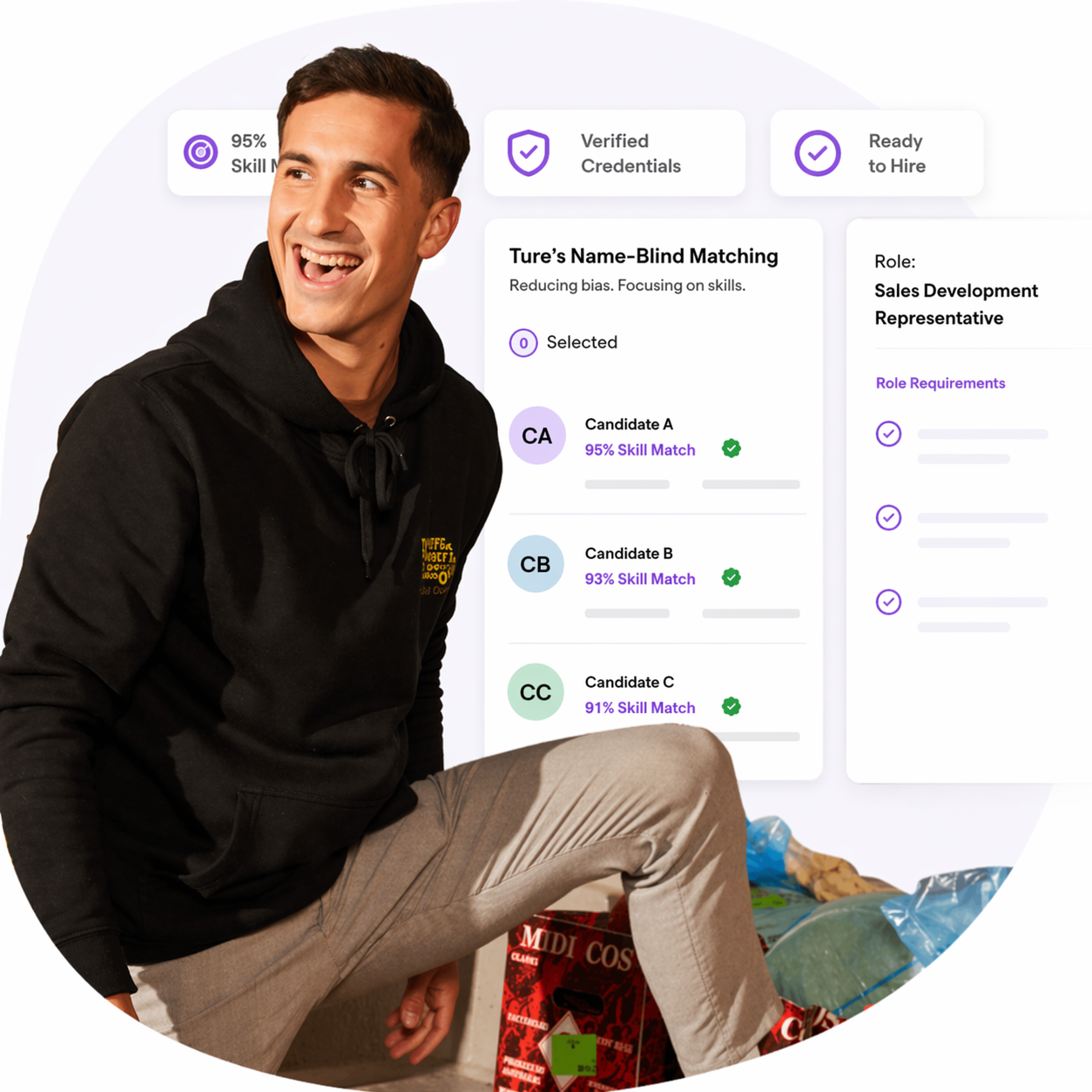
“The AI skills matching against the 32,000-skill database surfaces candidates on competency alignment instead of keyword overlap. My last two hires came from candidates I would have scrolled past.”
Ben Olusola, Engineering Hiring Manager, Tidepool Analytics
FAQ
Skills translation, unpacked.
It takes a job description — often vague, inconsistent, or overloaded with nice-to-haves — and returns a structured skills map: the core capabilities, proficiency levels, and adjacent skills that matter for the role. Recruiters and hiring managers review the same map instead of debating requirements from different starting points.
The translator maps against a standardized taxonomy of 32,000 skills and 58,000 occupations. Output is designed for human review — it gives your team a stronger starting point, not a final decision. Most teams adjust 10-20% of the output before publishing a role.
Yes. Paste an existing JD or upload a batch. The translator works with the language your team already uses and returns a normalized version alongside the original so you can compare.
No. It complements it. If you have an existing framework, the translator maps your roles into the shared skills taxonomy so internal and external roles use the same language. If you do not have one, it gives you a defensible starting point.
Yes. The output is a recommendation, not a constraint. Hiring managers can add, remove, or reweight skills before the role goes live. The system remembers edits to improve future translations for similar roles.
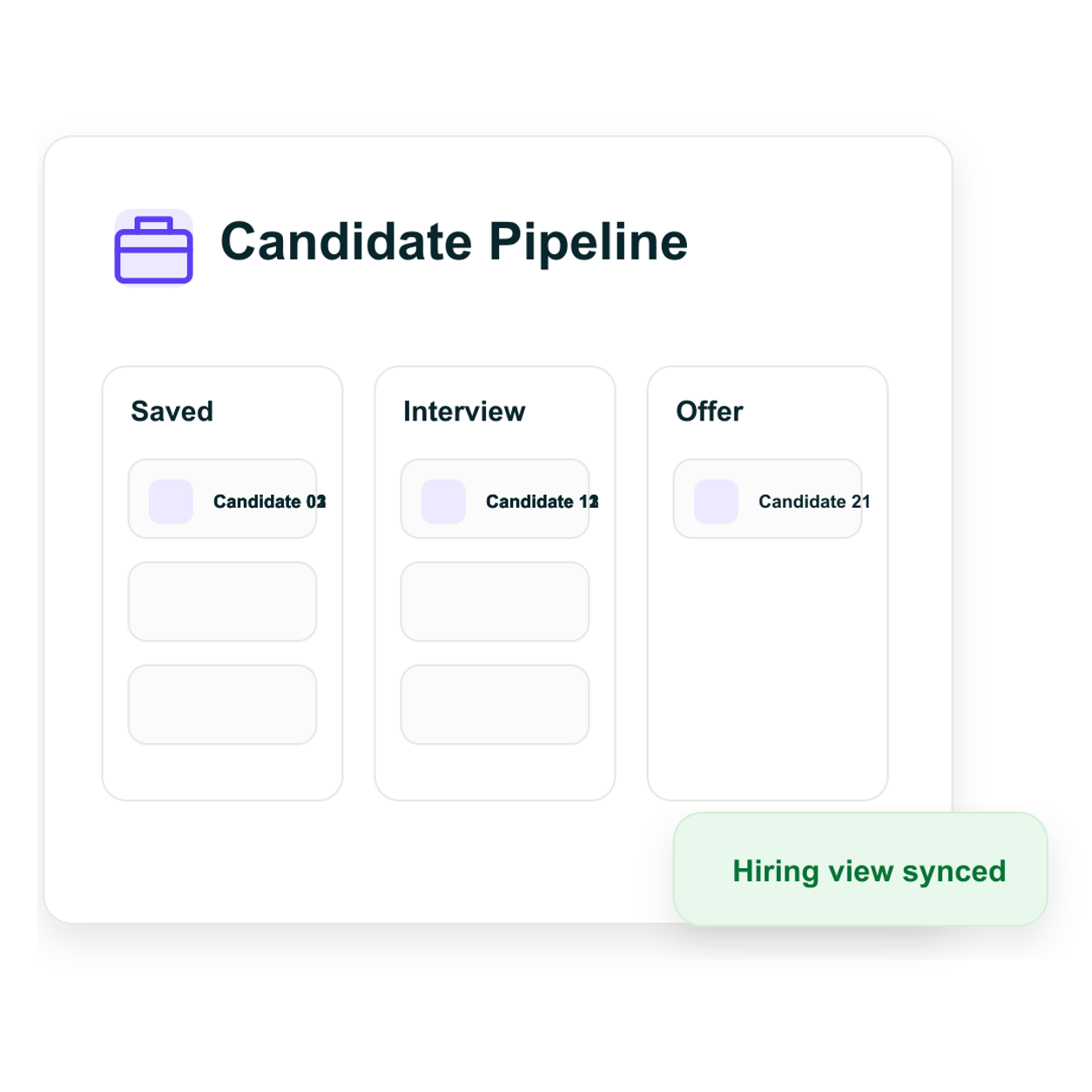
Make candidate evaluation consistent across reviewers.
Help your team interpret roles more clearly, screen more consistently, and build a cleaner skills-first hiring workflow.